Newsletter Subscribe
Enter your email address below and subscribe to our newsletter
Enter your email address below and subscribe to our newsletter

 ByJohn A
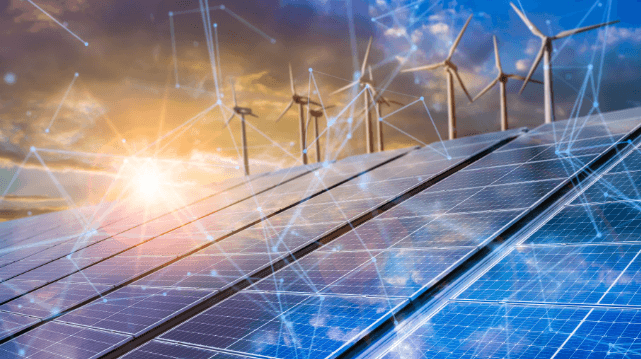
Renewable energy is increasingly intertwined with advanced technology. Modular turbines, AI forecasting, and digitalization cut capital costs and maintenance needs while lowering project risk. The smart grid, scalable storage, and distributed energy resources boost reliability and speed of deployment. Data-driven demand management aligns supply with consumption, enhancing efficiency. New business models and performance-based PPAs monetize flexibility, backed by policy and market design that reward reliability. The result is cleaner, more affordable, and more resilient energy systems—with challenges that invite further examination.
Technology advances are accelerating renewable growth by improving efficiency, reducing costs, and enabling scalable deployment. Industry data show modular turbines, improved forecasting, and digitalization lowering capital spend and maintenance. This enhances grid resilience and accelerates project finance timelines. Policy economics align incentives with reliability, supporting faster permitting and investment flows. Market insight confirms continued productivity gains, driving cleaner energy access while preserving strategic autonomy.
The Smart Grid and Storage Revolution marks a pivotal shift in energy systems, as advanced grid architectures, real-time analytics, and scalable storage solutions enable higher integration of variable renewables. It emphasizes grid resilience through enhanced contingency management, distributed energy resources, and rapid restoration capabilities. Battery economics shape investment, balancing capital costs with long-term savings, while policy and market design accelerate deployment and reliability.
Data-driven demand management leverages AI, forecasting, and efficiency measures to align energy supply with actual consumption patterns.
The approach emphasizes data driven forecasting to anticipate peaks and dips, enabling flexible generation and distribution.
AI powered efficiency reduces waste, optimizes storage use, and supports demand response.
This disciplined methodology delivers transparent, scalable systems aligned with market- and consumer-driven freedoms.
What concrete models are turning clean tech into scalable, bankable ventures? The market favors modular capital, performance-backed PPAs, and asset-light platforms that reduce risk for investors. Distributed generation, microgrids vision, and lifecycle economics underpin viable business cases. Operators monetize flexibility, storage, and demand response, while transparent monetization schemes align stakeholder incentives, accelerating deployment without sacrificing financial discipline or long-term value.
See also: Renewable Energy Powered by Technology
Affordable options for households include household solar, utility-scale storage, and distributed generation, with cost declines and incentives driving adoption; data shows payback periods shortening as efficiency improves, enabling independence, while grid resilience benefits support informed, freedom-seeking consumers.
A 20% local job increase often accompanies renewables, illustrating wind power economics and broader employment shifts. The analysis shows local job impacts vary by project type, workforce training, and funding. Growth aligns with community resilience and practical energy goals.
Long term storage presents environmental tradeoffs, including resource extraction and end-of-life challenges, but enables reliability and emissions reductions. The analysis indicates lifecycle impacts vary by chemistries, recycling viability, and grid integration, guiding data-driven, industry-aware decisions for freedom-loving stakeholders.
Yes, renewables can power heavy industry at scale with sufficient storage; however, their renewables reliability hinges on grid integration, storage environmental impacts, and ongoing cost reductions, affecting heavy industry feasibility and long-term competitiveness for a freedom-minded audience.
Policy incentives influence technology adoption costs by shifting risk pricing, accelerating tech diffusion, and flattening cost curves; impact metrics reveal quicker ROI, while targeted incentives stabilize markets, enabling scalable investment and freer innovation across industry boundaries.
The convergence of modular turbines, AI forecasting, and digitalization is expanding renewable capacity while reducing costs and risk. Smart grids, scalable storage, and distributed resources enhance reliability and speed deployment, supported by data-driven demand management and new business models that monetize flexibility. Despite policy and market design challenges, the trajectory remains data-driven and performance-focused. Like a well-tuned orchestra, technology harmonizes inputs—generation, storage, and demand—into cleaner, more affordable, and resilient energy systems for the future.